End of arm tooling (EOAT).
Design, grip, and control at the exact point where your robot meets the product. End of arm tooling (EOAT) determines whether handling is stable, fast, and damage-free, especially when products vary or cycle times are tight. The right EOAT improves yield, reduces defects, and increases flexibility across operations.
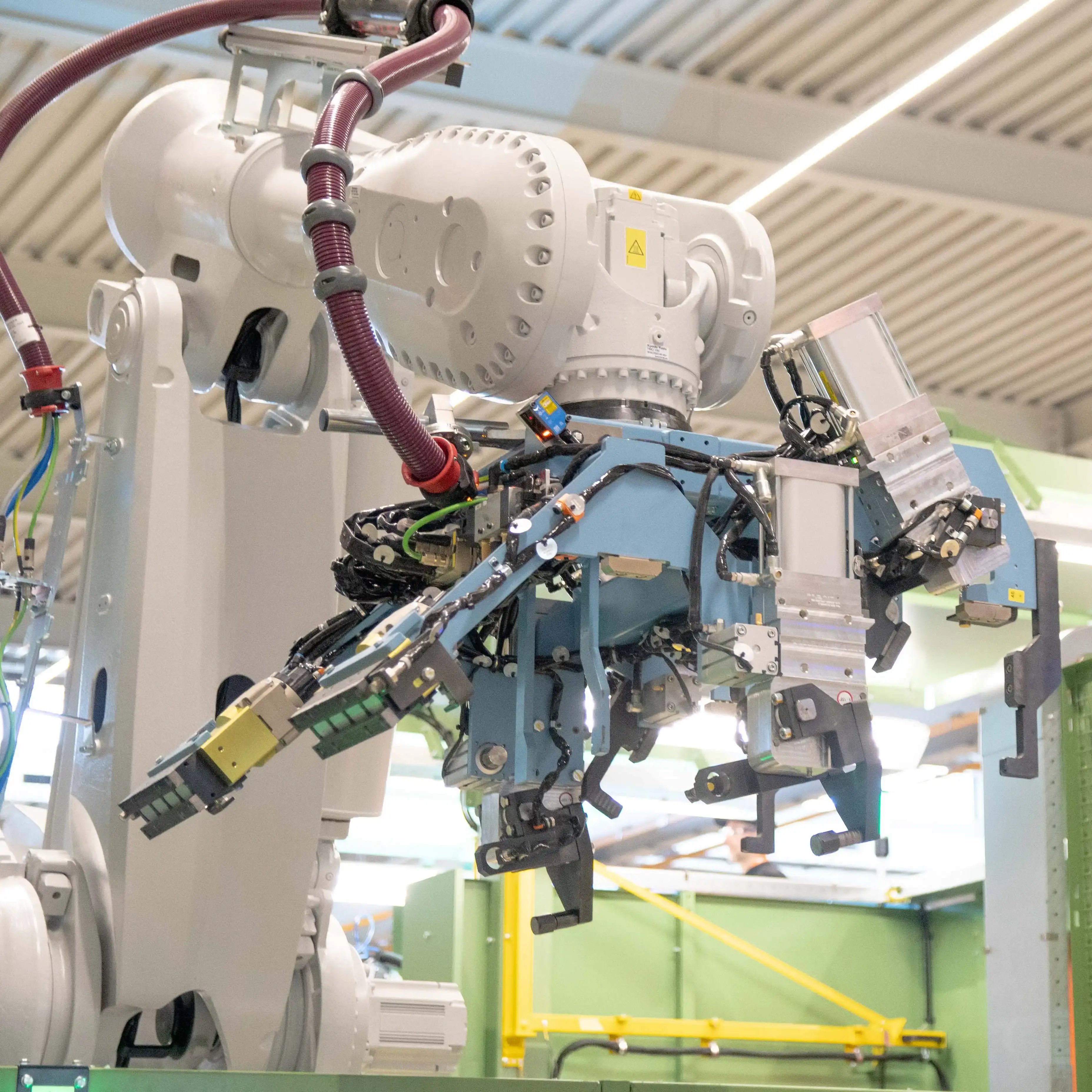
What is end of arm tooling?
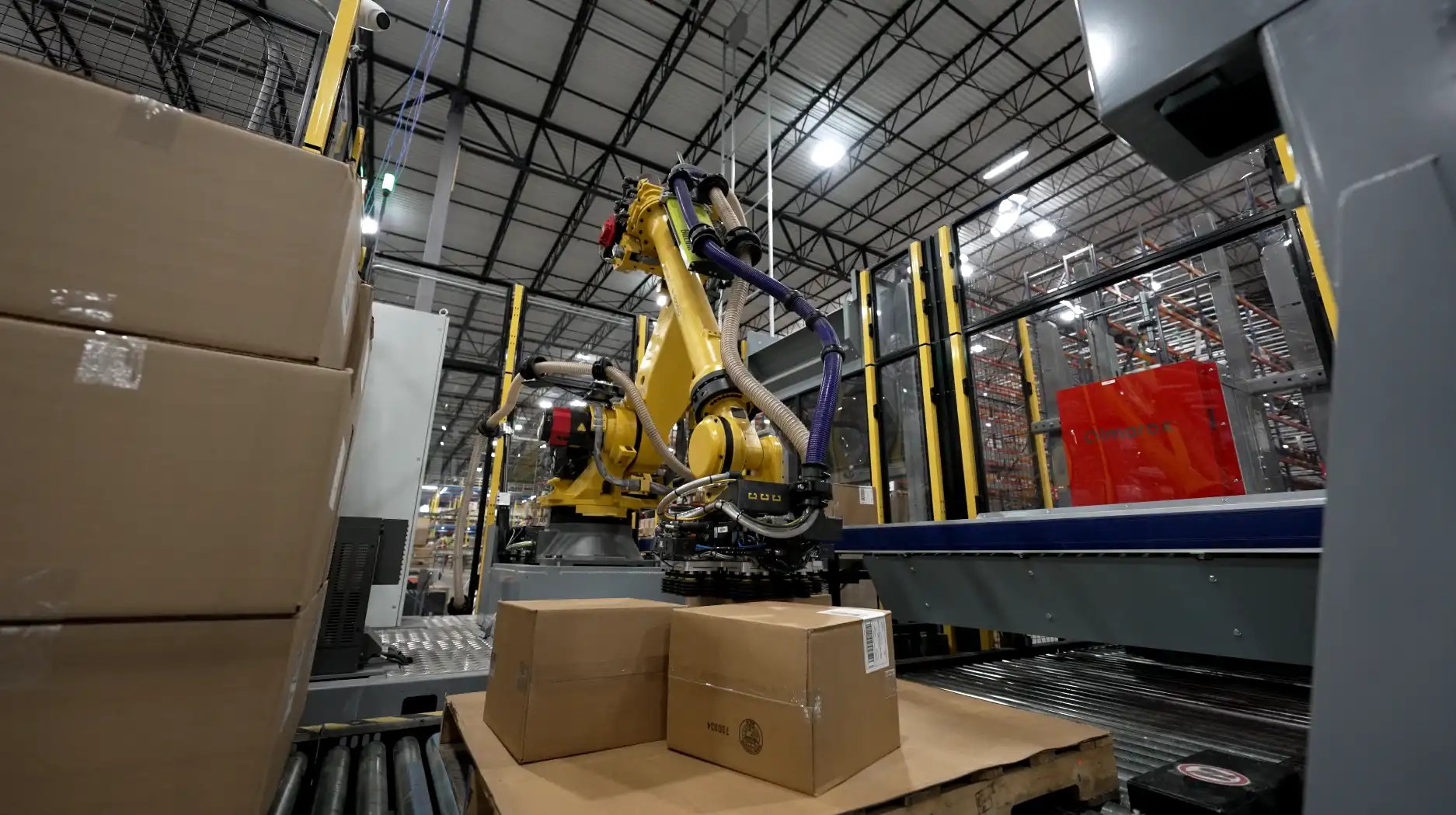
An end of arm tool (EOAT) is the “hand” of a robot: a mechatronic system that physically interacts with products. It enables robots to pick, hold, manipulate, or position items with precision. Without EOAT, a robot cannot perform handling tasks.
How it works
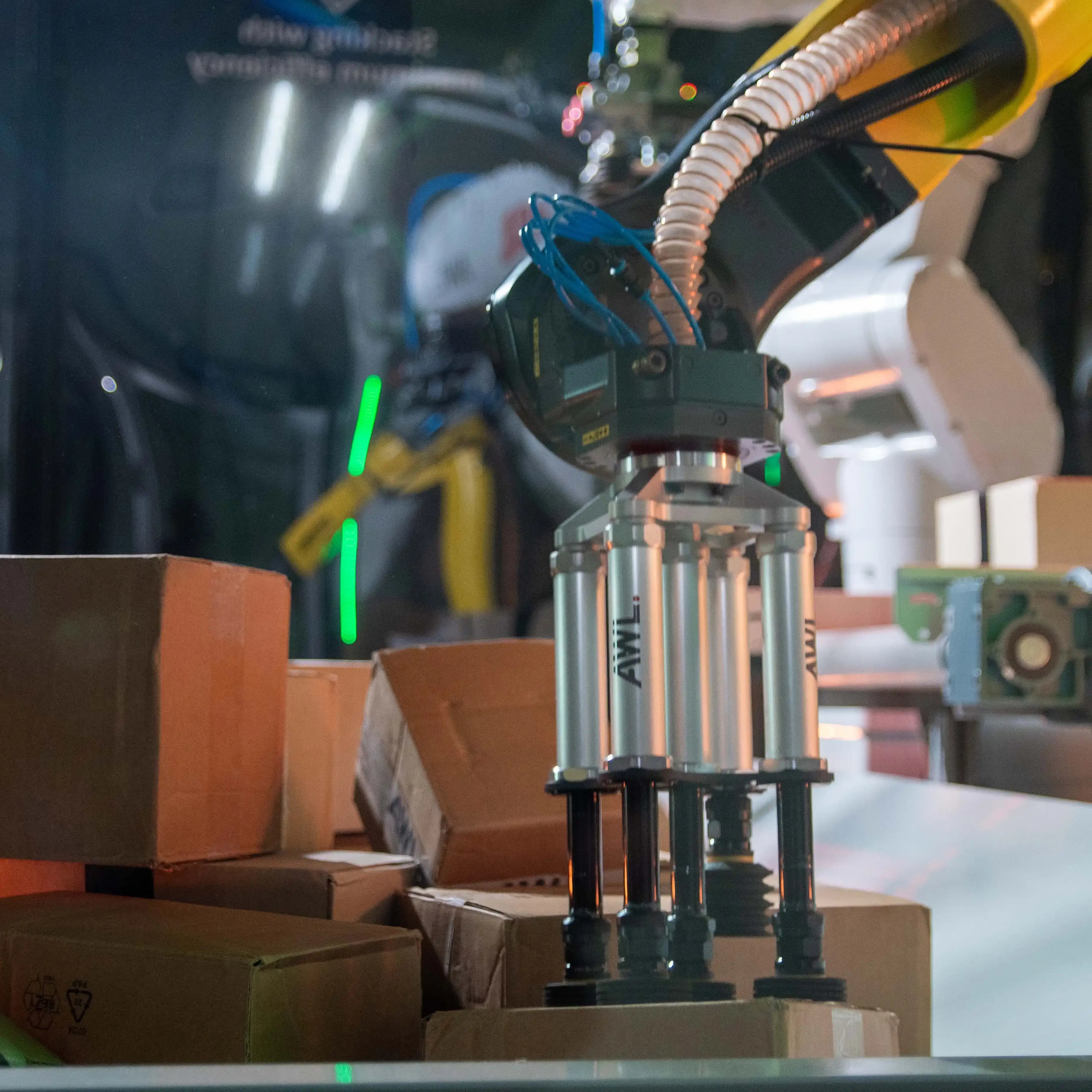
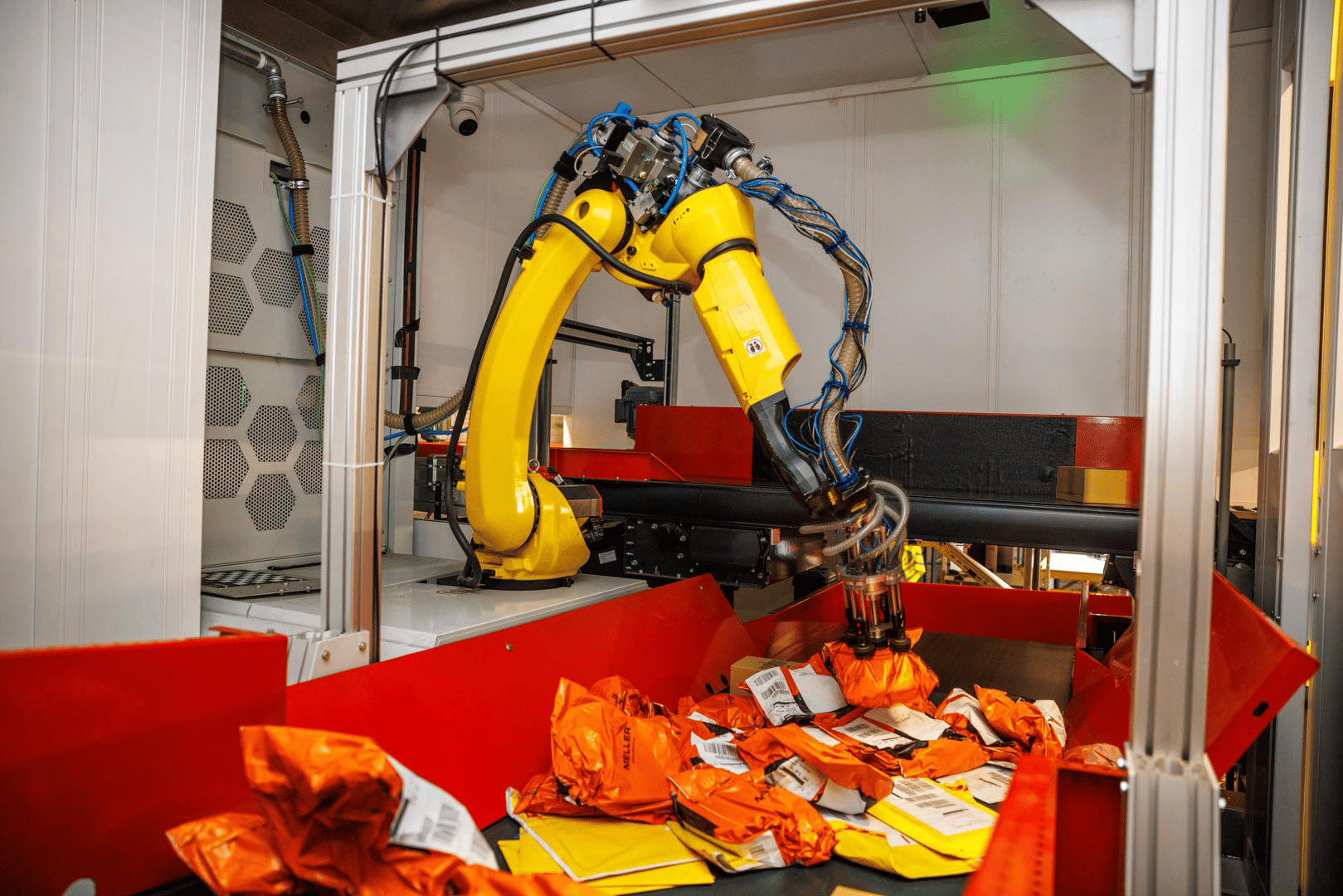
Different products require different gripping methods. AWL designs end-of-arm tooling with vacuum, mechanical, or combined gripping technologies to ensure reliable handling of a wide range of product shapes, sizes, weights, and surface types. Hybrid grippers combine multiple technologies in a single tool, providing greater flexibility and reducing the need for tool changes when product variations occur.
-
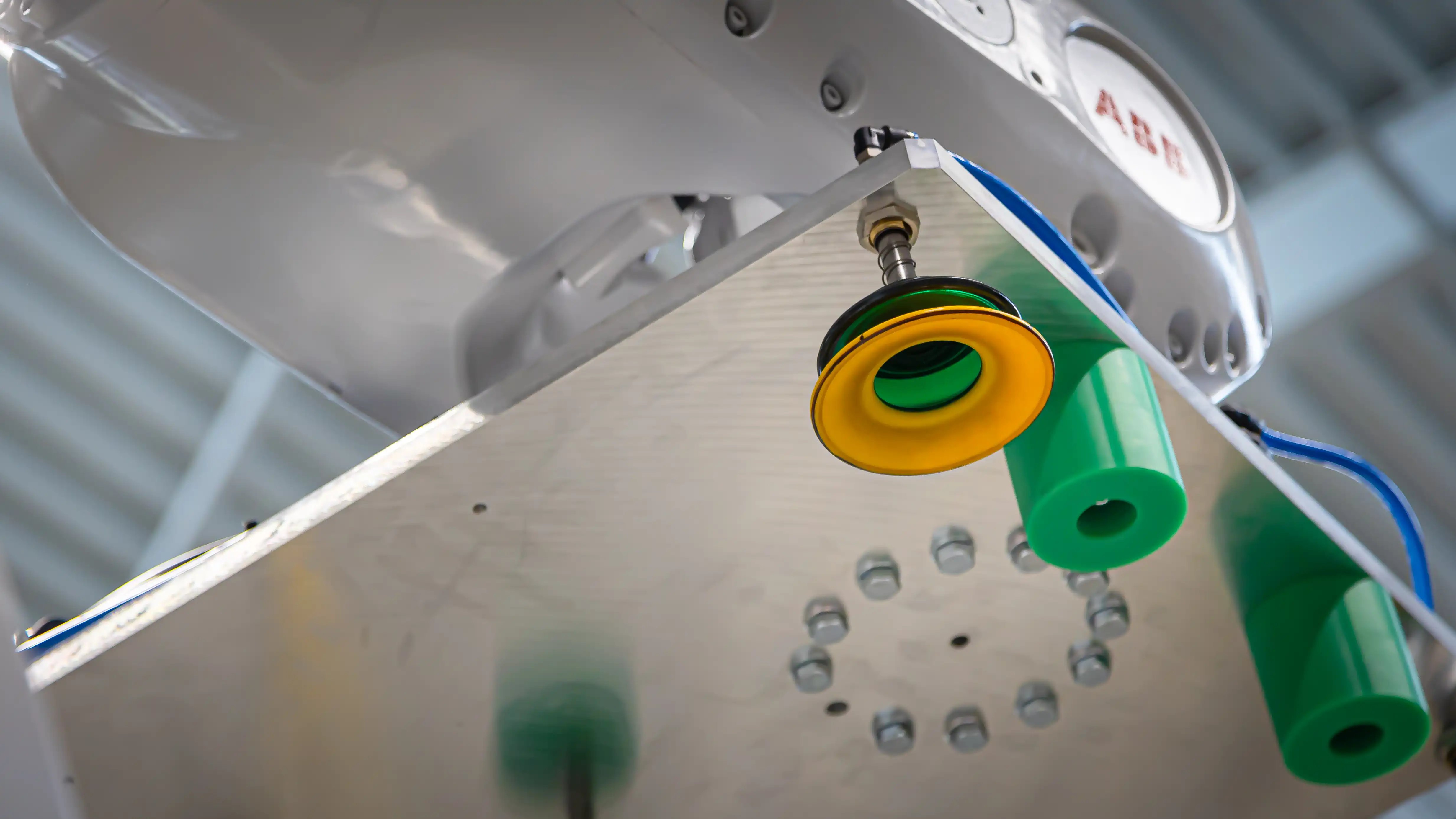
Vacuum grippers for stable handling of boxes, bags, and products with flat or smooth surfaces.
-
Mechanical grippers designed for precise control of products with complex shapes, varying dimensions, or challenging materials.
-
Hybrid grippers combining multiple gripping technologies to maximize flexibility and reduce changeover requirements.

Random mixed palletizing

Parcel induction

Item picking

Tote handling

Random mixed depalletizing
.webp?Place_Stamping_stacking_%20(7).webp&width=3840&height=2160&name=solutions_RoboticPick%26Place_Stamping_stacking_%20(7).webp?Place_Stamping_stacking_%20(7).webp)
Stamping stacking
_FeaturedImage.webp?%20Assembly%20cells_ClipnutAssembly_%20(2)_FeaturedImage.webp&width=2497&height=1978&name=Automated%20Joining%20%26%20Assembly%20cells_ClipnutAssembly_%20(2)_FeaturedImage.webp?%20Assembly%20cells_ClipnutAssembly_%20(2)_FeaturedImage.webp)
Clipnut assembly
_featured.webp?width=5472&height=3072&name=solutions_welding%20and%20handling%20of%20thin%20metal%20products%20(1)_featured.webp)
Welding and handling of thin metal products
_featured.webp?width=5568&height=3712&name=solutions_cutting%20welding%20and%20handling%20of%20thick%20metal%20products%20(11)_featured.webp)
Cutting, welding, and handling of thick metal products
_%20(5).webp?width=2100&height=1179&name=Preperation%2c%20cutting%20and%20welding%20of%20pipes%20(sprinkler)_%20(5).webp)
Preparation, cutting, and welding of pipes
/solutions_Automated%20manufactring%20lines_Flexible%20manufacturing%20of%20cabinets_%20(4)_FeaturedImage.webp?width=1920&height=1080&name=solutions_Automated%20manufactring%20lines_Flexible%20manufacturing%20of%20cabinets_%20(4)_FeaturedImage.webp)
Flexible manufacturing of cabinets
.webp?width=640&height=480&name=automated%20manufacturing%20linesFlexible%20manufacturing%20of%20Miscellaneous%20Steel_%20(4).webp)
Flexible manufacturing of miscellaneous steel
%20(IBC-fencing)/Tarter_USA_%20(13).webp?width=1920&height=1080&name=Tarter_USA_%20(13).webp)
Flexible manufacturing lines
.webp?width=1920&height=1080&name=Intelligent%20manufacturing%20solutions_AI%20Weld%20Inspection_%20(5).webp)
AI weld inspection

''We're still learning and the team is still getting more comfortable with it, but at the end of the day we really starting to see the productivity, the benefits that we were expecting.''
Read more.webp?width=5474&height=3651&name=CustomerExperience_Tarter_%20(3).webp)

“The biggest advantage for automation for us is the ability to ramp up and scale up as volume increases.“
Read more.webp?width=3840&height=2160&name=CustomerExperience_Muhlhoff_%20(2).webp)

"Automation helps us ensure consistent quality while reducing the workload on our employees."
Read more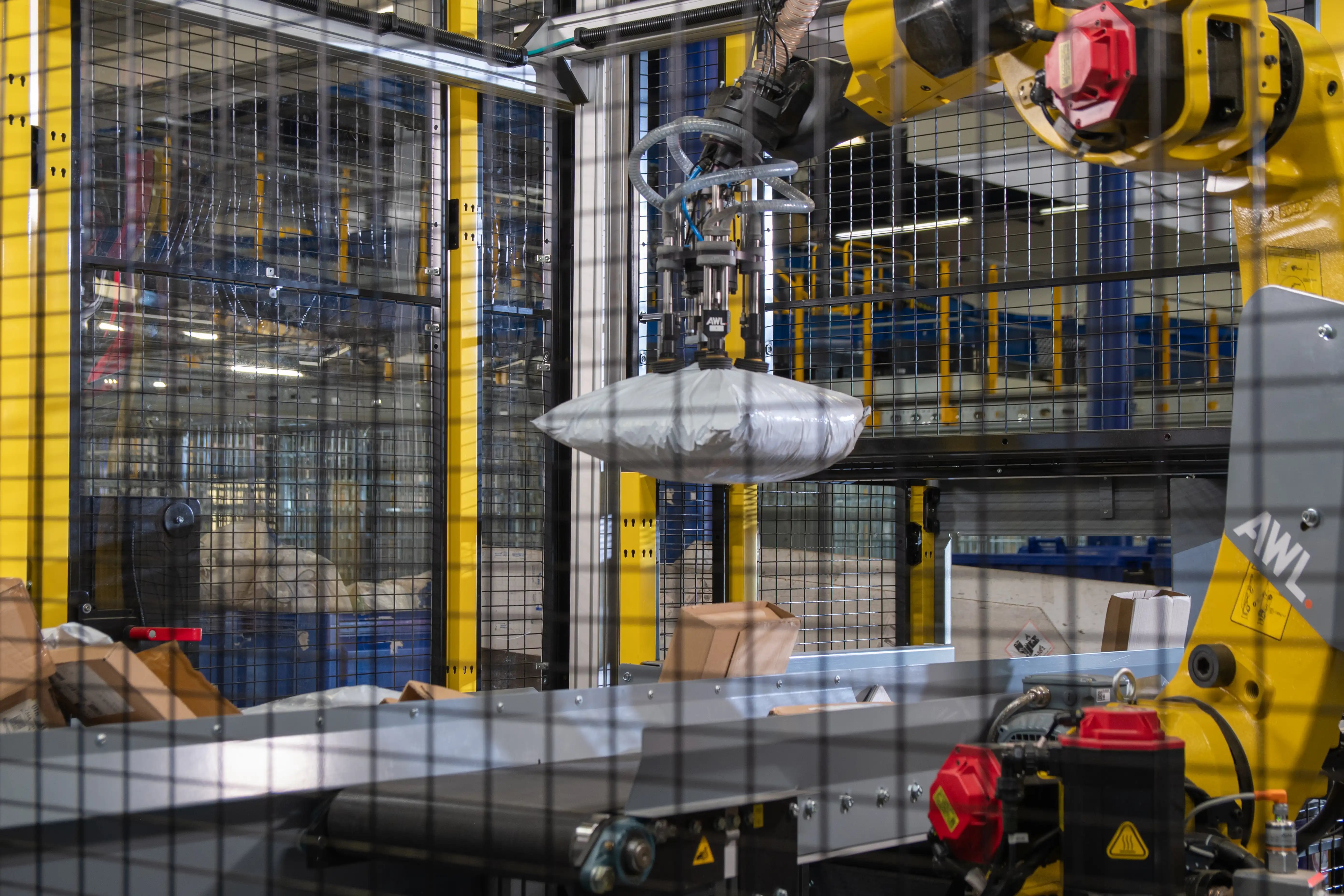

.webp?width=7008&height=4672&name=CustomerExperience_OPS_%20(6).webp)


.webp?width=4672&height=4000&name=contact_CTA_(5).webp)