Welding thick sheet metal.
Producing large steel structures often requires significant manual work, creating challenges around safety, quality consistency, scalability, and workforce availability. By combining multiple production steps into one coordinated process, manufacturers can create a safer, more controlled, and more efficient operation for heavy-duty fabrication.
.webp?width=5568&height=3712&name=solutions_welding%20of%20thick%20sheet%20metal%20(9).webp)
What is welding thick sheet metal?
Cutting, welding and handling of thick metal products combine multiple production steps into one coordinated manufacturing system for large steel assemblies and structural steel components. The solution is commonly applied in industries such as agriculture, construction equipment, storage systems, and other heavy-duty manufacturing environments where large parts require multiple processing and joining operations.
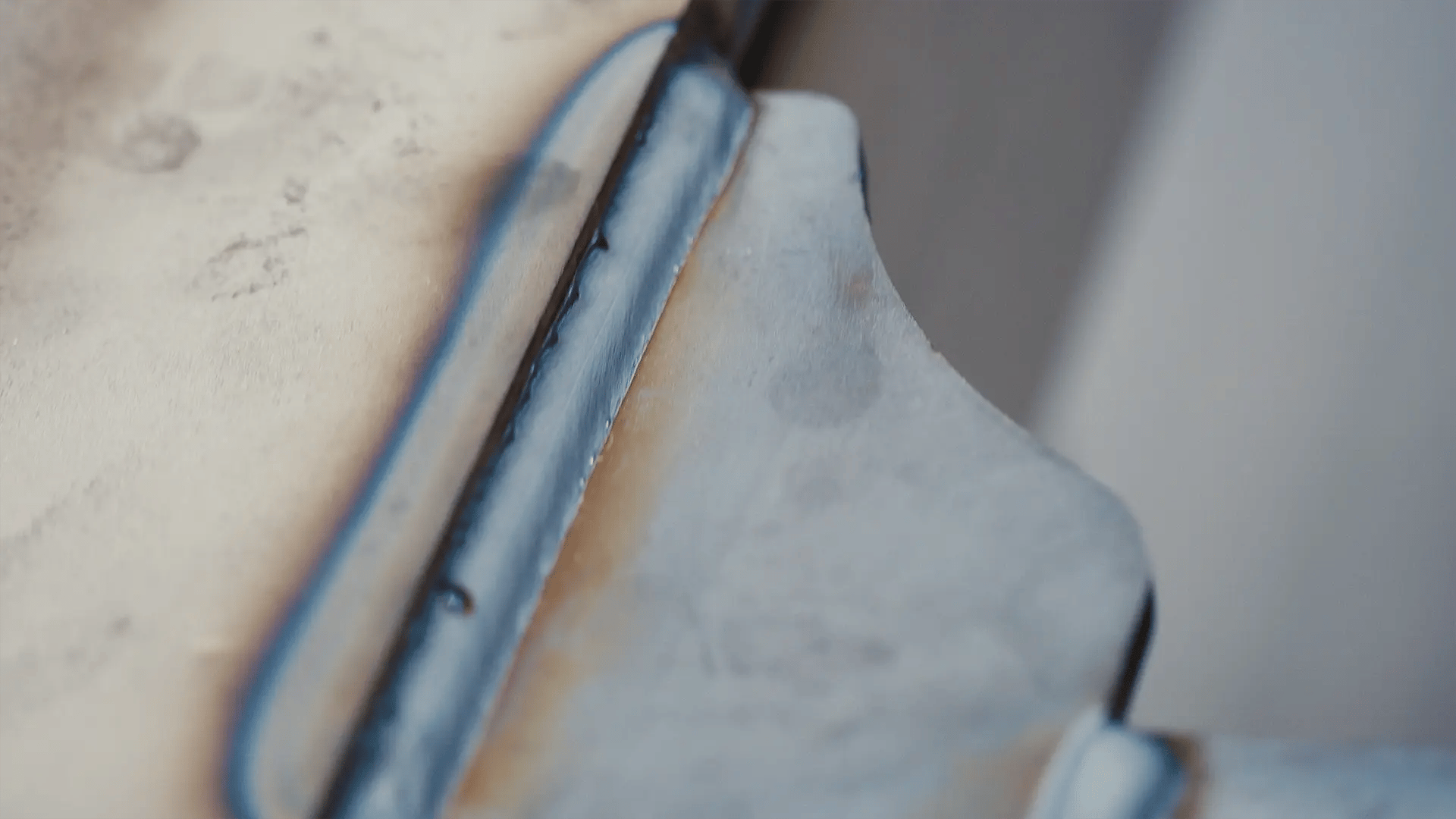
System approach to these challenges
Thick metal manufacturing performs best when handling, processing, and joining activities are designed as one coordinated production flow rather than separate operations. This approach improves process control, reduces manual intervention in high-risk environments, and supports consistent production across a wide range of products.
- Integrated production flow from cutting to final assembly
- Designed around safe and controlled part handling
- Quality assurance throughout production and post-weld operations
.webp?width=5568&height=3712&name=solutions_automated%20joining%20and%20assembly%20cells_welding%20of%20thick%20sheet%20metal%20(6).webp)
.webp?width=3840&height=2160&name=CustomerExperience_Muhlhoff_%20(2).webp)

.webp?width=5474&height=3651&name=CustomerExperience_Tarter_%20(3).webp)

.webp?width=7008&height=4672&name=CustomerExperience_OPS_%20(6).webp)

.webp?width=1920&height=1080&name=solutions_Intelligent%20manufacturing%20solutions_AI%20Weld%20Inspection_%20(5).webp)
AI weld inspection
_featured.webp?width=5472&height=3072&name=solutions_welding%20and%20handling%20of%20thin%20metal%20products%20(1)_featured.webp)
Welding and handling of thin metal products
_featured.webp?width=5568&height=3712&name=solutions_cutting%20welding%20and%20handling%20of%20thick%20metal%20products%20(11)_featured.webp)
Cutting, welding, and handling of thick metal products
_%20(5).webp?width=2100&height=1179&name=Preperation%2c%20cutting%20and%20welding%20of%20pipes%20(sprinkler)_%20(5).webp)
Preparation, cutting, and welding of pipes
/solutions_Automated%20manufactring%20lines_Flexible%20manufacturing%20of%20cabinets_%20(4)_FeaturedImage.webp?width=1920&height=1080&name=solutions_Automated%20manufactring%20lines_Flexible%20manufacturing%20of%20cabinets_%20(4)_FeaturedImage.webp)
Flexible manufacturing of cabinets
%20(IBC-fencing)/Tarter_USA_%20(13).webp?width=1920&height=1080&name=Tarter_USA_%20(13).webp)
Flexible manufacturing lines
.webp?width=640&height=480&name=automated%20manufacturing%20linesFlexible%20manufacturing%20of%20Miscellaneous%20Steel_%20(4).webp)
Flexible manufacturing of miscellaneous steel

Item picking
.webp?width=4672&height=4000&name=contact_CTA_(5).webp)