overview
What is AI weld inspection?
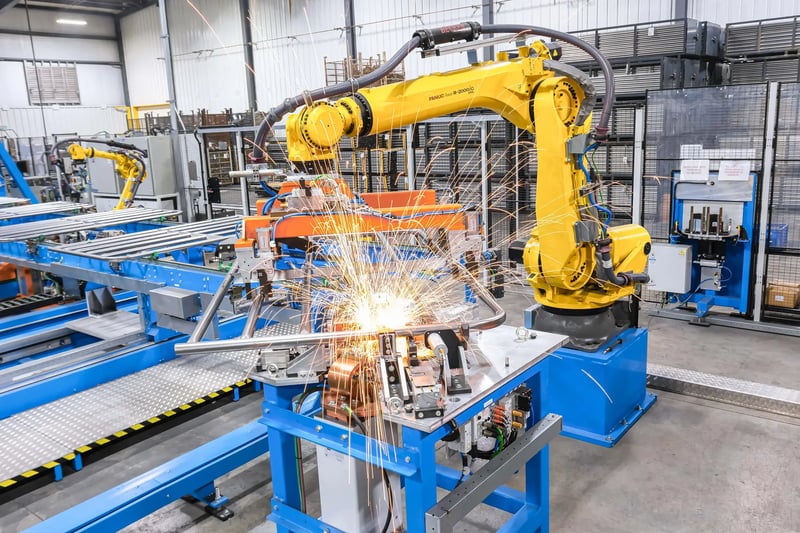
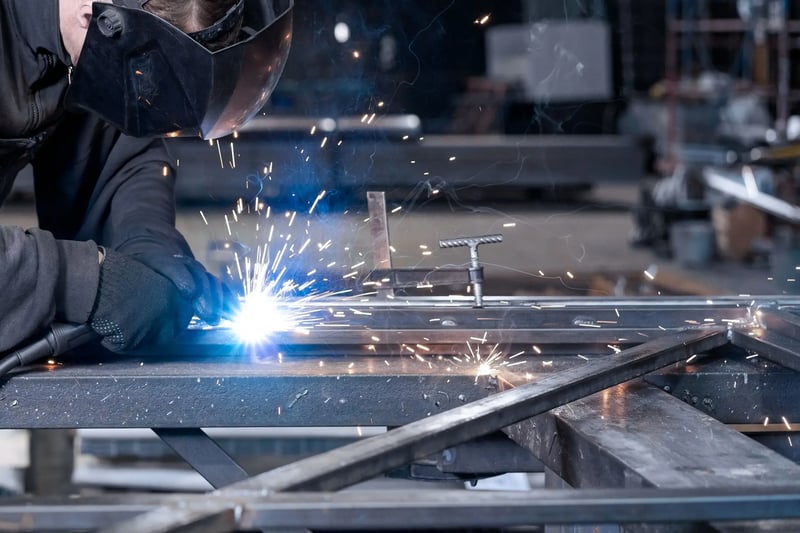
AI weld inspection automates the visual quality assessment of welded products. By combining cameras or laser sensors with AI models, defects are detected, dimensions are verified, and weld quality is classified in a consistent and repeatable manner. Every inspection result is linked to the individual part, enabling full traceability within automated production environments.
.webp?width=1920&height=1080&name=solutions_Intelligent%20manufacturing%20solutions_AI%20Weld%20Inspection_%20(5).webp)
Solution
System approach to these challenges
AWL integrates AI-driven inspection directly into production systems, replacing manual checks with a repeatable, data-driven process. The system is designed around weld variability, production flow, and traceability requirements, ensuring stable performance while protecting production flow.
- Automated weld detection, measurement, and classification.
- Per-weld traceability with images and serial linkage.
- Integration into new or existing robotic production cells.
.webp?width=1920&height=1080&name=solutions_Intelligent%20manufacturing%20solutions_AI%20Weld%20Inspection_%20(4).webp)
.webp?width=3840&height=2160&name=CustomerExperience_Muhlhoff_%20(2).webp)

.webp?width=5474&height=3651&name=CustomerExperience_Tarter_%20(3).webp)

.webp?width=7008&height=4672&name=CustomerExperience_OPS_%20(6).webp)

_featured.webp?width=5472&height=3072&name=solutions_welding%20and%20handling%20of%20thin%20metal%20products%20(1)_featured.webp)
Welding and handling of thin metal products
_featured.webp?width=5568&height=3712&name=solutions_cutting%20welding%20and%20handling%20of%20thick%20metal%20products%20(11)_featured.webp)
Cutting, welding, and handling of thick metal products
%20(IBC-fencing)/Tarter_USA_%20(13).webp?width=1920&height=1080&name=Tarter_USA_%20(13).webp)
Flexible manufacturing lines
/solutions_Automated%20manufactring%20lines_Flexible%20manufacturing%20of%20cabinets_%20(4)_FeaturedImage.webp?width=1920&height=1080&name=solutions_Automated%20manufactring%20lines_Flexible%20manufacturing%20of%20cabinets_%20(4)_FeaturedImage.webp)
Flexible manufacturing of cabinets
.webp?width=4672&height=4000&name=contact_CTA_(5).webp)