Welding and handling of thin metal products.
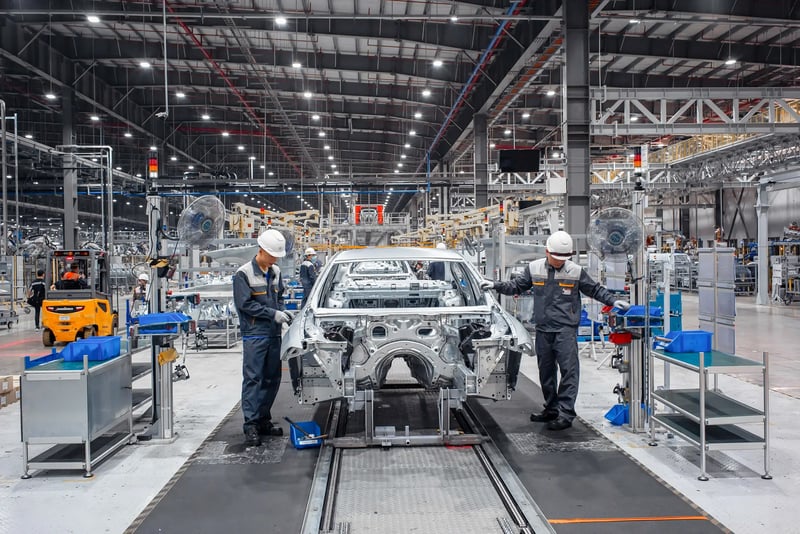
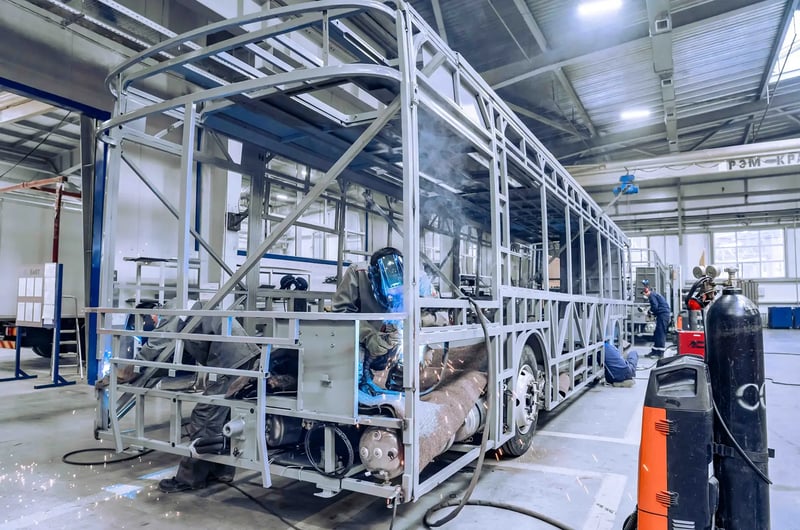
Thin metal product production demands strict control over heat input, positioning, and process consistency, especially for products such as automotive body parts, seating components, fences, IBC containers, and other thin-walled assemblies. Maintaining quality at scale requires a controlled production approach in which welding and handling are fully integrated, reducing distortion, limiting variation between process steps and improving output while lowering labor dependency and cost per part.
.webp?width=3458&height=3072&name=solutions_welding%20and%20handling%20of%20thin%20metal%20products%20(11).webp)
What is welding and handling of thin metal products?
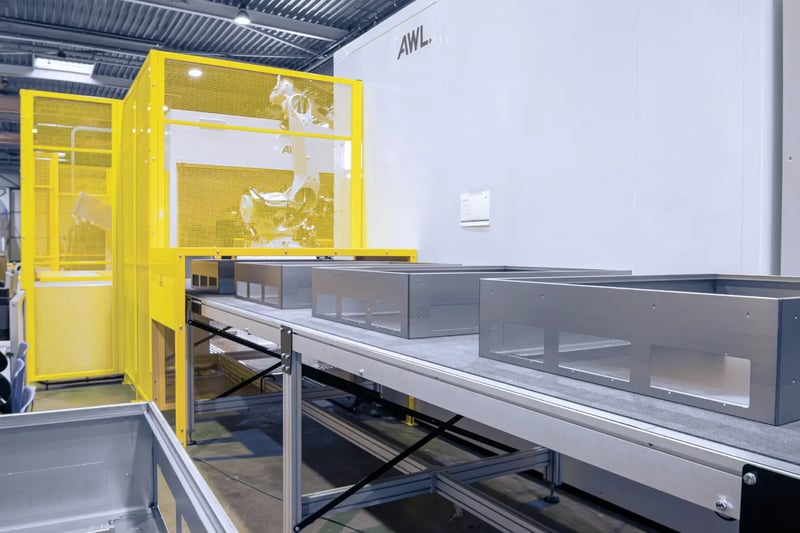
Thin metal product welding typically involves materials below 3 mm, where even small variations in heat or positioning directly affect product quality. This robotic solution combines welding and handling into a single, controlled production flow, reducing variability and enabling efficient, high-volume manufacturing of thin-sheet metal components.
.webp?width=6000&height=4000&name=solutions_automated%20manufacturing%20lines_welding%20and%20handling%20of%20thin%20metal%20products%20(6).webp)
System approach to these challenges
The production of thin metal products is highly sensitive to heat, positioning, and variation between processes. AWL integrates welding and handling into a single, controlled production line, reducing distortion, improving consistency, lowering the cost per part, increasing throughput, and reducing manual operations.
-
Integrated handling reduces positioning errors and part damage during transfers.
-
Controlled weld sequencing limits heat input and distortion.
-
In-line inspection and traceability ensure repeatable quality across all parts.
.webp?width=6416&height=4672&name=solutions_automated%20manufacturing%20lines_welding%20and%20handling%20of%20thin%20metal%20products%20(9).webp)
.webp?width=3840&height=2160&name=CustomerExperience_Muhlhoff_%20(2).webp)

.webp?width=5474&height=3651&name=CustomerExperience_Tarter_%20(3).webp)

.webp?width=7008&height=4672&name=CustomerExperience_OPS_%20(6).webp)

_featured.webp?width=5568&height=3712&name=solutions_cutting%20welding%20and%20handling%20of%20thick%20metal%20products%20(11)_featured.webp)
Cutting, welding, and handling of thick metal products
_%20(5).webp?width=2100&height=1179&name=Preperation%2c%20cutting%20and%20welding%20of%20pipes%20(sprinkler)_%20(5).webp)
Preparation, cutting, and welding of pipes
/solutions_Automated%20manufactring%20lines_Flexible%20manufacturing%20of%20cabinets_%20(4)_FeaturedImage.webp?width=1920&height=1080&name=solutions_Automated%20manufactring%20lines_Flexible%20manufacturing%20of%20cabinets_%20(4)_FeaturedImage.webp)
Flexible manufacturing of cabinets
%20(IBC-fencing)/Tarter_USA_%20(13).webp?width=1920&height=1080&name=Tarter_USA_%20(13).webp)
Flexible manufacturing lines
.webp?width=1920&height=1080&name=solutions_Intelligent%20manufacturing%20solutions_AI%20Weld%20Inspection_%20(5).webp)
AI weld inspection

Item picking
.webp?Place_Stamping_stacking_%20(7).webp&width=3840&height=2160&name=solutions_RoboticPick%26Place_Stamping_stacking_%20(7).webp?Place_Stamping_stacking_%20(7).webp)
Stamping stacking
_FeaturedImage.webp?%20Assembly%20cells_ClipnutAssembly_%20(2)_FeaturedImage.webp&width=2497&height=1978&name=Automated%20Joining%20%26%20Assembly%20cells_ClipnutAssembly_%20(2)_FeaturedImage.webp?%20Assembly%20cells_ClipnutAssembly_%20(2)_FeaturedImage.webp)
Clipnut assembly
.webp?width=4672&height=4000&name=contact_CTA_(5).webp)