Industrial AI.
Product variation, changing conditions, and increasing labor constraints can limit the effectiveness of traditional automation. AI helps automated systems recognize patterns, make decisions, and adapt in real time, improving picking, inspection, and robotic performance while reducing manual intervention and process disruptions.
.webp?width=2520&height=2160&name=technologies_ai%20(5).webp)
What is Industrial AI?
Industrial Artificial Intelligence (AI) helps automated systems handle variation that is difficult to manage with fixed programming alone. By analyzing data, recognizing patterns, and making real-time decisions, AI improves performance in tasks such as inspection, picking, and robotic handling. This makes automation more flexible, efficient, and reliable in changing production and intralogistics environments.
.webp?width=2448&height=2081&name=technologies_ai%20(1).webp)
How it works
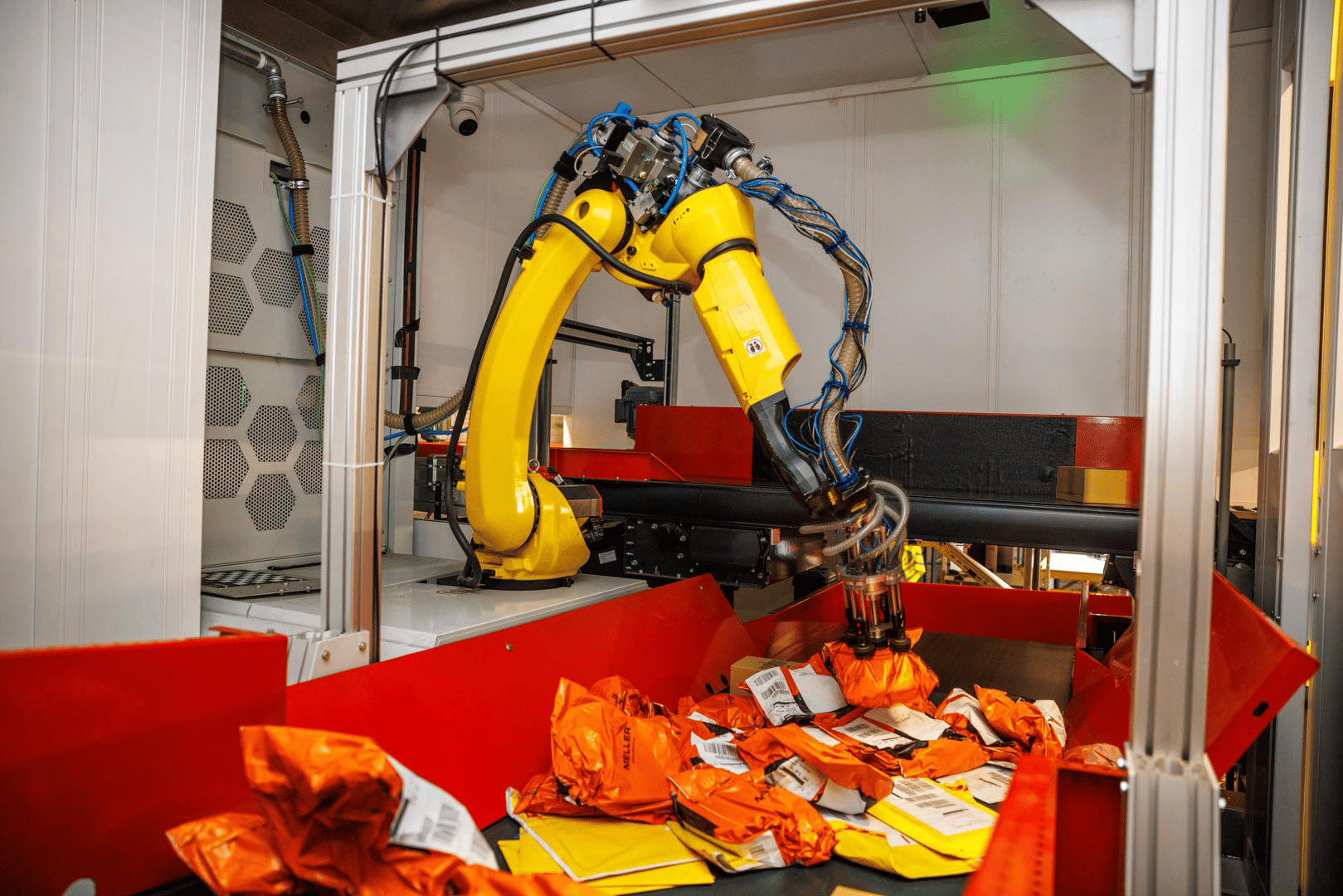
Industrial AI helps automated systems recognize products, interpret changing conditions, and select the most appropriate action in real time. AI models trained on data captured by cameras, sensors, and equipment enable robots to handle variation accurately and consistently.
-
Deep-learning vision for recognition, defect detection, and robotic picking.
-
AI-driven motion planning and collision avoidance for efficient robot operation.
-
Adaptive process control that adjusts welding parameters to measured part variation.
.webp?width=1920&height=1080&name=technologies_ai%20(2).webp)
.webp?width=1920&height=1080&name=Intelligent%20manufacturing%20solutions_AI%20Weld%20Inspection_%20(5).webp)
AI weld inspection

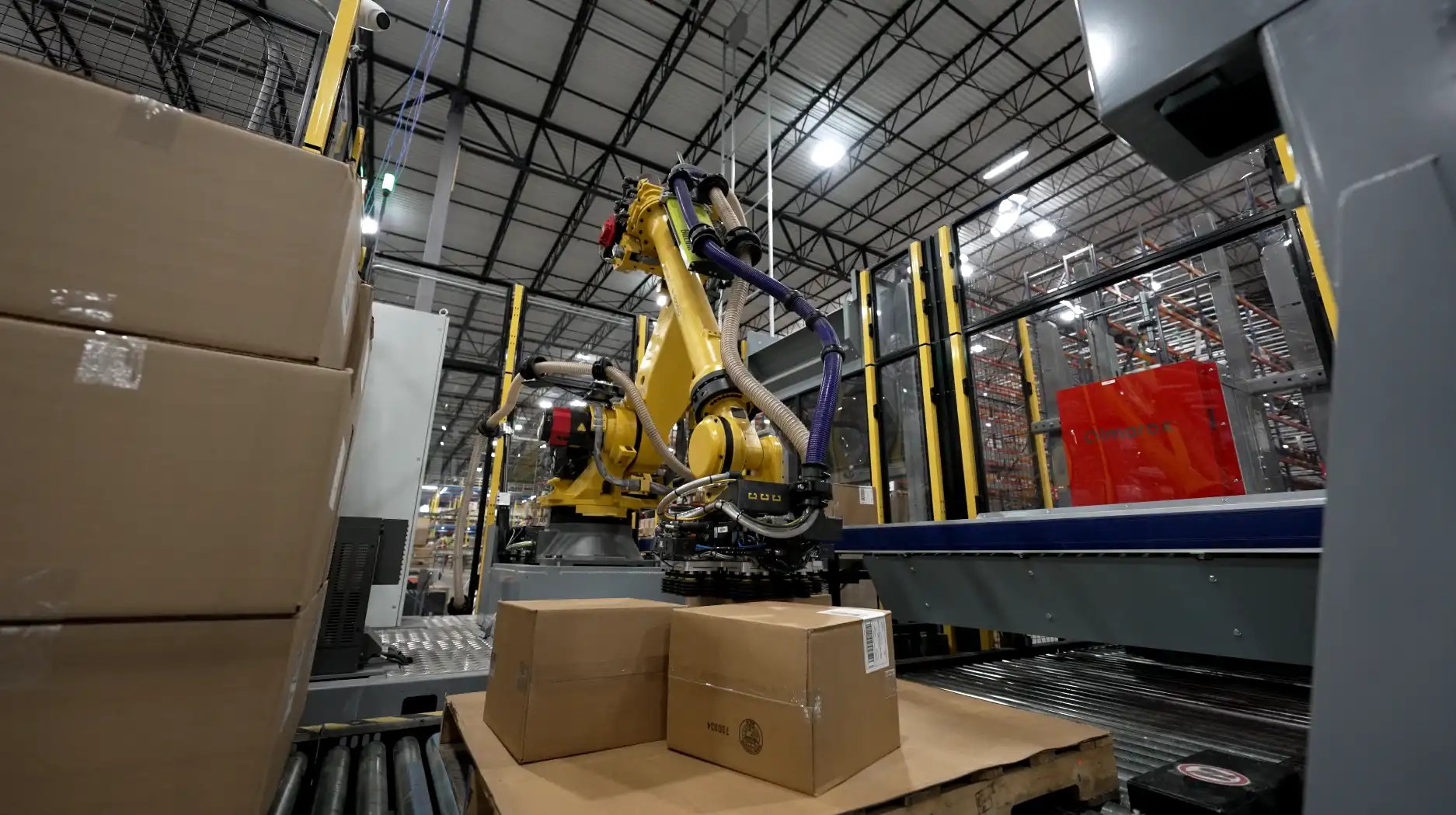
Random mixed palletizing

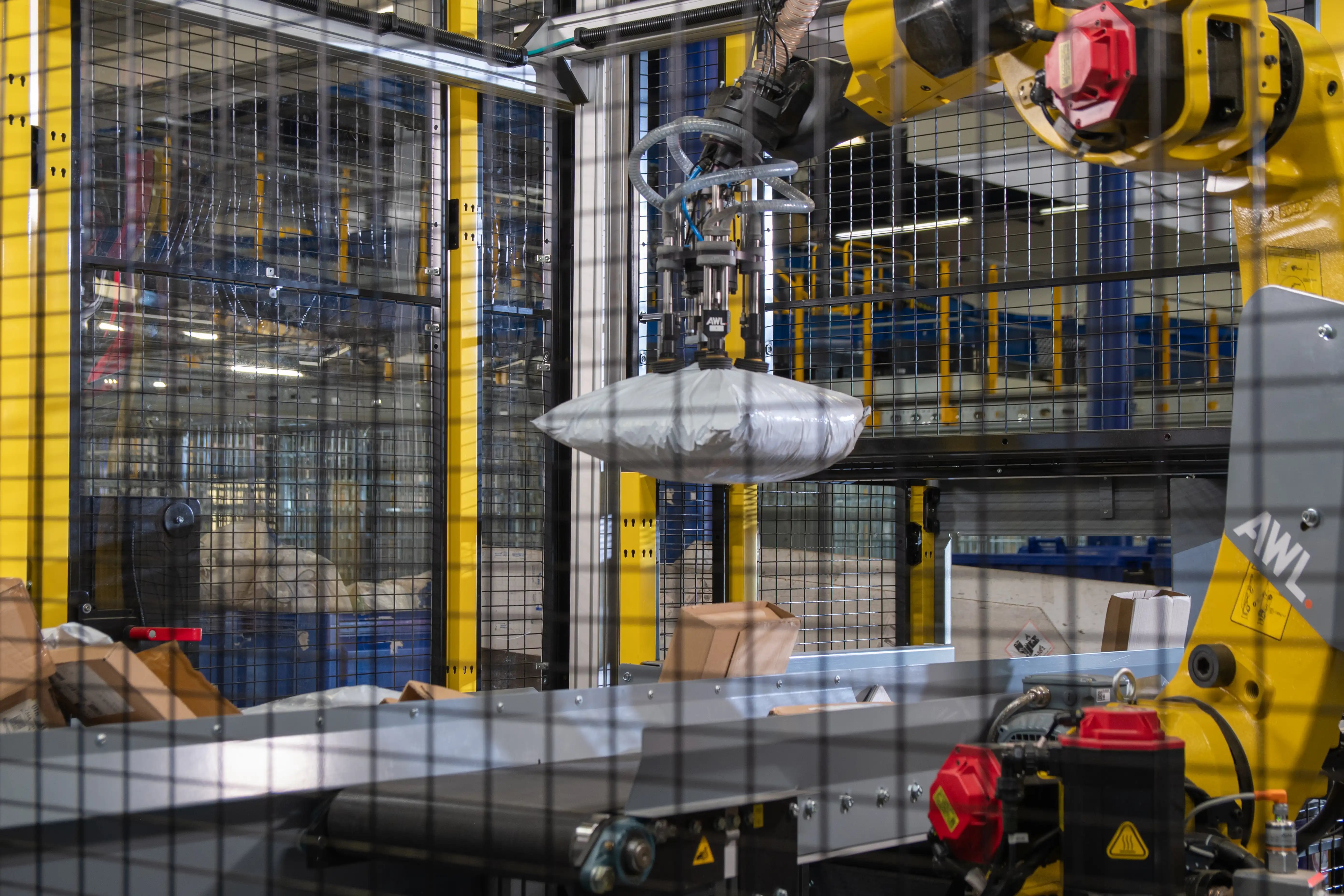
Parcel induction

Item picking

Random mixed depalletizing
.webp?Place_Stamping_stacking_%20(7).webp&width=3840&height=2160&name=solutions_RoboticPick%26Place_Stamping_stacking_%20(7).webp?Place_Stamping_stacking_%20(7).webp)
Stamping stacking
.webp?width=640&height=480&name=automated%20manufacturing%20linesFlexible%20manufacturing%20of%20Miscellaneous%20Steel_%20(4).webp)
Flexible manufacturing of miscellaneous steel



.webp?width=4672&height=4000&name=contact_CTA_(5).webp)