Technology

End of arm tooling (EOAT)

Inconsistent handling, long changeovers, and product damage limit robot performance. AWL-designed end of arm tooling improves grip reliability, cycle time, and flexibility. The result is higher throughput, stable quality, and faster adaptation to new products or variants.

overview

What is end of arm tooling?

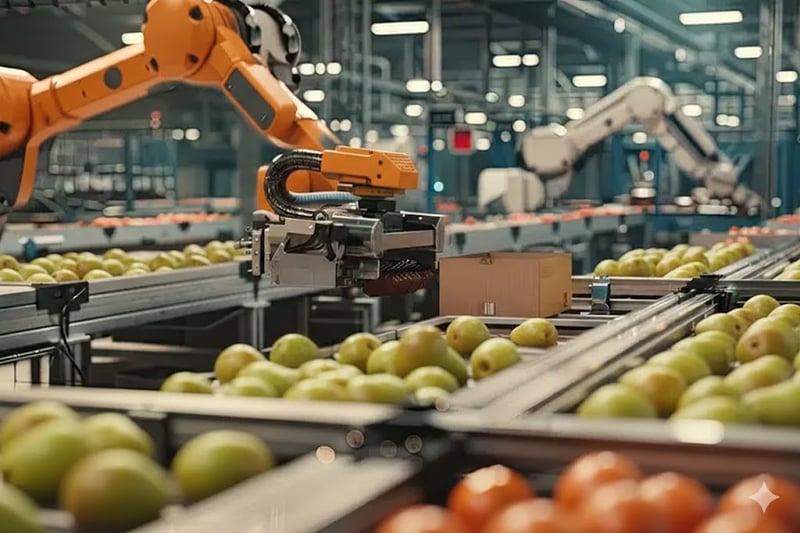
End of arm tooling (EOAT) is the interface between a robot and the product it handles. It includes grippers, suction systems, and special tools. EOAT determines accuracy, speed, and reliability. AWL designs EOAT as part of the total robotic system, balancing robustness, flexibility, and maintainability.

Challenges

What this technology solves

Product damage during handling

Slow product changeovers

Inconsistent grip reliability

Limited handling flexibility

Technology

How it works

AWL engineers EOAT to match product, process, and robot dynamics. Grip principles, materials, sensors, and compliance are selected together. This ensures predictable motion, stable handling, and fast changeovers across different product types.

  • Mechanical, vacuum, and hybrid grippers.

  • Integrated sensors for grip and presence detection.

  • Quick-change interfaces for flexible production.

Results

Benefits to your operation

Higher handling reliability

Shorter changeover times


No product damage


Approach

A proven approach to robotic automation

The success of robotic automation depends on more than the technology itself. The way requirements are defined, engineering decisions are made, and systems are supported after commissioning all influence long-term operations performance.

Bringing together expertise across engineering, integration, commissioning, and support helps create solutions that perform reliably in operation.

Customer experiences

Robotic automation that performs

Company logo

“We’re still learning and the team is still getting more comfortable with it, but at the end of the day, we really starting to see the productivity, the consistency of it and some of the benefits that we were expecting.”

John Doe, Company name

Read case study
1993

“We’re still learning and the team is still getting more comfortable with it, but at the end of the day, we really starting to see the productivity, the consistency of it and some of the benefits that we were expecting.”

Bill Monk, GNC

Read case study
Company logo

“We’re still learning and the team is still getting more comfortable with it, but at the end of the day, we really starting to see the productivity, the consistency of it and some of the benefits that we were expecting.”

John Doe, Company name

Read case study
contact_CTA_(5)

Let’s talk about future-ready solutions for your business.